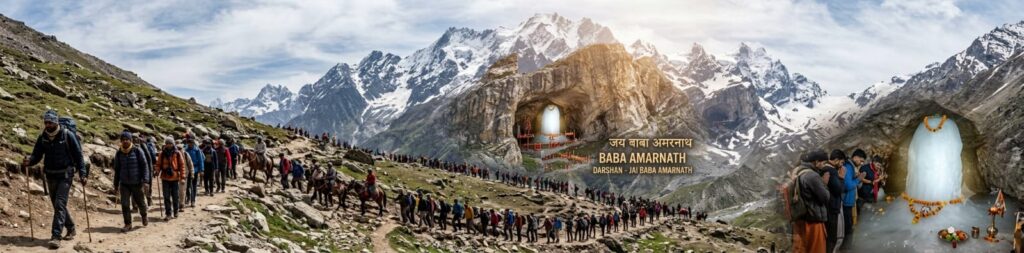
Amarnath Yatra Travel Guide 2026: Everything You Need to Know Before Your Pilgrimage
Introduction The Amarnath Yatra is one of India’s most sacred and spiritually significant pilgrimages. Every year, millions of devotees travel to the holy Amarnath Cave Shrine, located high in the Himalayas of Jammu and Kashmir, to seek the blessings of Lord Shiva. The naturally formed ice Shivling inside the cave attracts pilgrims from across the world and symbolizes faith, devotion, and spiritual awakening. Apart from its religious importance, the journey offers breathtaking mountain landscapes, snow-covered peaks, crystal-clear rivers, lush green valleys, and unforgettable trekking experiences. Whether you are visiting for religious reasons or to experience the beauty of the Himalayas, this guide covers everything you need to know before planning your Amarnath Yatra. About Amarnath Cave The Amarnath Cave is situated at an altitude of approximately 3,888 meters (12,756 feet) above sea level. It is believed that Lord Shiva revealed the secret of immortality (Amar Katha) to Goddess Parvati inside this cave. The naturally formed ice Shivling is considered a miracle by devotees. It grows and shrinks according to the phases of the moon, making it one of the most unique pilgrimage sites in India. Religious Significance According to Hindu mythology, Lord Shiva chose the remote Amarnath Cave to narrate the secret of eternal life to Goddess Parvati. To ensure complete privacy, he left behind Nandi, the moon, snakes, Ganesha, and the five elements before entering the cave. This story has made Amarnath one of the holiest pilgrimage destinations in Hinduism. Visiting the shrine is believed to cleanse sins and bring spiritual peace. Best Time to Visit The Amarnath Yatra is organized every year during the summer months, usually from late June to August, depending on weather conditions and official schedules. The best time to visit is during: Early July for pleasant weather Mid-July for comfortable trekking Early August before the pilgrimage concludes Travelers should always check the official Yatra schedule before planning their trip. How to Reach Amarnath By Air The nearest airport is Srinagar International Airport. From Srinagar, pilgrims can travel by taxi or bus to Baltal or Pahalgam. By Train The nearest railway station is Jammu Tawi Railway Station. Regular trains connect Jammu with major Indian cities. By Road Jammu is well connected by road. Buses and taxis are available to Srinagar, Baltal, and Pahalgam. Routes to Amarnath Cave 1. Pahalgam Route Distance: Approximately 36–48 km trek Duration: 3–5 days Difficulty: Moderate This traditional route passes through beautiful valleys, forests, rivers, and glaciers. Major stops include: Chandanwari Sheshnag Panchtarni Holy Cave 2. Baltal Route Distance: Around 14 km Duration: One day (up and down possible) Difficulty: Challenging This route is shorter but much steeper and physically demanding. Registration Process Pilgrims must complete the official registration before participating in the Yatra. Requirements generally include: Valid government ID Medical fitness certificate Passport-size photographs Registration slip Carrying your registration documents throughout the journey is essential. What to Pack Packing wisely can make your journey more comfortable. Clothing Thermal wear Waterproof jacket Woolen sweaters Gloves Warm socks Raincoat Footwear Trekking shoes Comfortable sandals Essentials Water bottle Energy bars Dry fruits Torch Power bank Personal medicines Sunglasses Sunscreen Backpack Health and Safety Tips Since the shrine is located at a high altitude, pilgrims should prepare themselves physically before the journey. Helpful tips include: Walk regularly before your trip. Stay hydrated. Avoid alcohol and smoking. Eat light meals. Take adequate rest. Follow security instructions. Do not ignore symptoms of altitude sickness. Helicopter Service Pilgrims who cannot undertake the full trek can use helicopter services from Baltal or Pahalgam. Helicopter rides significantly reduce travel time and are ideal for elderly travelers and families with children. Advance booking is highly recommended because seats fill up quickly. Accommodation Accommodation options include: Government camps Tents Dharamshalas Hotels in Srinagar Hotels in Pahalgam Hotels in Baltal Booking accommodation early is advisable during the Yatra season. Responsible Travel Help preserve the natural beauty of the Himalayas by: Avoiding plastic waste Using reusable water bottles Respecting wildlife Keeping trekking routes clean Following local regulations Responsible tourism ensures future generations can enjoy this sacred destination. Conclusion The Amarnath Yatra is much more than a pilgrimage—it’s a journey of faith, endurance, and natural beauty. From the sacred ice Shivling to the majestic Himalayan landscapes, every step of the journey leaves a lasting impression on the heart and soul. Whether you choose the scenic Pahalgam route or the shorter Baltal route, careful planning, proper preparation, and respect for nature will make your pilgrimage safe and memorable. If you are looking for a spiritual adventure combined with breathtaking mountain views, the Amarnath Yatra should undoubtedly be on your travel bucket list.